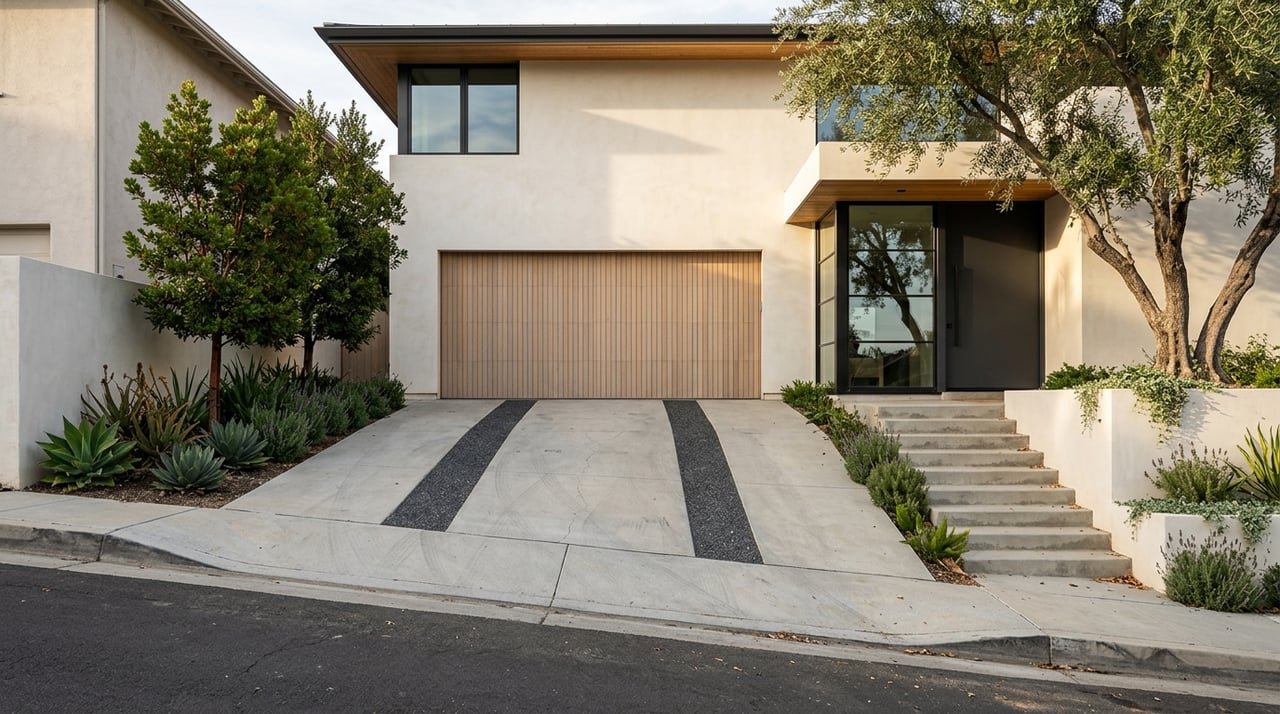
If you have ever wondered why two Hollywood Hills homes with similar square footage can land in very different price ranges, the answer is usually not just size or finishes. In this part of Los Angeles, value often turns on what you can see, how exposed you feel, and how easy it is to get home every day. If you are buying, selling, or simply trying to understand the market, this guide will help you read those differences more clearly. Let’s dive in.
Hollywood Hills Starts With a High Baseline
Hollywood Hills already sits in a premium price range before any special feature is added. In late spring and early summer 2026, reported market benchmarks placed the neighborhood roughly in the high-$1 million to low-$2 million range, depending on whether the source measured sale prices, listing prices, or home values.
That matters because even a modest percentage premium can translate into a very large dollar change. In a hillside market like Hollywood Hills, buyers are not comparing homes on a flat grid. Elevation, street layout, lot orientation, and design context can all shift how a property is perceived and priced.
View Often Drives the Biggest Premium
In Hollywood Hills, view is usually the clearest and most visible pricing factor. Los Angeles planning documents describe the area as offering scenic panoramic views of the Los Angeles Basin and Downtown skyline, and they note that greater elevation can widen the panorama.
That lines up with broader housing research. Studies on residential pricing have found that stronger views can produce meaningful premiums, with partial views and full views often valued differently. The exact numbers vary by market, but the pattern is consistent: better views usually command higher prices.
Not All Views Are Equal
In practical terms, buyers tend to sort views into a loose hierarchy. Unobstructed city-light or basin views usually sit at the top, followed by broad canyon or treetop views, then partial or filtered views, and finally homes with little or no meaningful outlook.
That ranking is not an official city pricing chart, but it reflects how topography and buyer behavior tend to work in the hills. A dramatic view can create an immediate emotional response, while a blocked or narrow view may feel less special, even in an otherwise attractive home.
Why View Adds So Much Value
A strong view is hard to replicate. You cannot easily create wider sightlines, raise a home’s elevation, or control what a competing lot offers if your property does not already have the right position.
That scarcity is part of the value story. In a market where the baseline price is already close to $2 million, view quality can move a home into a different pricing conversation very quickly.
Privacy Shapes Buyer Perception
Privacy may feel subjective, but it is a real housing attribute. Research on residential privacy focuses on layout, sightlines, and the relationship between a home and its surroundings, rather than treating privacy as just a vague lifestyle preference.
In Hollywood Hills, privacy often comes from elevation, setbacks, landscaping, orientation away from the street, and reduced visibility from nearby homes or passing traffic. A property that feels tucked away can attract a different level of interest than one with open sightlines into living spaces or decks.
Privacy in the Hills Is Physical
This is one reason two homes on the same street can perform differently. One may have carefully placed windows, mature landscaping, and a quieter approach from the road, while another may feel exposed from neighboring lots.
City descriptions of places like Whitley Heights show how terrain and seclusion contribute to a property’s identity. In pricing terms, that means privacy is not just a mood. It is often built into the structure, siting, and setting of the home.
Access Can Help or Hurt Value
Access is one of the most underestimated pricing drivers in Hollywood Hills. The area’s hillside streets are often narrow and winding, with limited through-routes, according to Los Angeles planning guidance.
That affects more than first impressions. Street width, driveway geometry, steep turns, and how easily you can enter or exit a property all shape daily usability. If getting home feels awkward, stressful, or restrictive, many buyers will notice right away.
Everyday Convenience Matters
A home with a simple, functional approach often has broader appeal. Buyers generally respond well to a property where the driveway is efficient, backing out is manageable, and there is a practical way to arrive without complicated maneuvering.
On the other hand, a steep or awkward access point can narrow the buyer pool. It may not be a deal breaker for everyone, but it can affect how confidently buyers value the home.
Access Also Connects to Rules
In hillside areas, physical access is not just a comfort issue. Los Angeles hillside rules include requirements tied to paved roadway access for permit eligibility on some lots.
That helps explain why access carries so much weight in this market. It affects day-to-day function, future flexibility, and how a property is evaluated within its hillside setting.
Parking Is a Major Factor in the Hills
Parking deserves its own category because it is clearly important in hillside housing. The city’s Baseline Hillside Ordinance guide includes detailed sections on covered parking, required spaces, tandem parking, driveway width, garage doors, stall dimensions, and even mechanical lifts.
That level of detail tells you something important. In Hollywood Hills, parking is not a minor amenity. It can be a major part of how livable and marketable a home feels.
What Buyers Usually Prefer
Homes with a level motor court, a true two-car garage, and usable guest parking are often easier to sell than otherwise similar homes that rely heavily on street parking. Functional parking reduces friction for owners and visitors alike.
By contrast, limited parking, difficult garage access, or a poor turnaround area can create hesitation. In a neighborhood where many streets are already challenging, practical parking can become a real premium feature.
Architecture Adds Scarcity
Hollywood Hills is not just a view market. It is also a design market. For many buyers, architecture is part of the value, especially in areas where preserved style, historical context, or neighborhood overlays make certain homes harder to duplicate.
Los Angeles City Planning notes that HPOZs exist to protect distinctive architectural and cultural resources. In these areas, exterior work, additions, landscaping, and new construction can face additional review, which helps preserve a neighborhood’s visual identity.
Protected Context Matters
The Hollywood Community Plan includes overlays such as Whitley Heights HPOZ, Hollywood Grove HPOZ, the Hollywoodland Specific Plan, and Hillside Construction Regulation. That means some pockets of Hollywood Hills are not only attractive, but also structurally less replicable.
For buyers, that can support a scarcity premium. You are not just buying square footage. You may also be buying into a preserved setting, a specific architectural language, and a level of neighborhood continuity that is difficult to recreate from scratch.
Why Design-Led Homes Stand Apart
Whitley Heights is a strong example of how architecture, terrain, and scarcity come together. The city describes it as a hilly district with a Mediterranean village character and a strong Spanish Colonial Revival identity.
Hollywoodland also carried historic style restrictions that shaped its architectural character for decades. In practical market terms, homes with intact period design or architecturally significant qualities can command stronger interest because they offer something that feels both distinctive and limited in supply.
Why Similar Homes Can Price Far Apart
This is the heart of the Hollywood Hills pricing puzzle. Two homes may look similar on paper, with comparable bedroom counts or interior size, yet still sit in very different price bands.
Usually, the difference comes down to the combination of outlook, privacy, access, parking, and architecture. When a home gets several of those things right at once, buyers often see it as much more complete and much harder to replace.
How to Read Listings More Clearly
If you are comparing Hollywood Hills properties, it helps to look past staging and headline price. Start by asking which features are truly scarce and which can be improved later.
A refreshed kitchen can be updated over time. A blocked view, awkward approach, or exposed siting is much harder to change.
Premium Signals to Watch
- Unobstructed city-light or basin views
- Broad canyon or treetop outlooks
- Privacy from the street and neighboring decks or windows
- Level or efficient driveway access
- A real two-car garage
- Usable guest parking
- Intact period details or architecturally significant design
Discount Signals to Watch
- Partial, filtered, or blocked views
- Steep or awkward access
- Dependence on street parking
- Poor turnaround space
- Visible neighboring sightlines into key living areas
- Remodels that erase architectural identity
What This Means for Buyers and Sellers
If you are buying in Hollywood Hills, the cleanest way to compare homes is to treat view as the most measurable premium, then weigh privacy, access, parking, and architecture as the features that explain the rest. That approach can help you see why a home is priced where it is, and whether the premium feels justified.
If you are selling, these same factors shape how your home should be positioned. A design-led property with strong outlook, privacy, and access should not be marketed like a generic listing. The story, presentation, and pricing strategy all need to reflect what actually makes the home scarce in this market.
In Hollywood Hills, value is rarely just about square footage. It is about how the home sits on the land, what it offers day to day, and how difficult that exact combination would be to find again. If you want help interpreting those details with a design-aware, market-savvy perspective, connect with Barry Gray & Associates.
FAQs
How do views affect Hollywood Hills home prices?
- Better views generally support higher prices, especially unobstructed city-light or basin views. Partial or blocked views usually carry less pricing power.
Why does privacy matter in Hollywood Hills real estate?
- Privacy affects how a home feels and functions. In the hills, elevation, landscaping, setbacks, and sightlines can all influence buyer interest and value.
Why is access so important for Hollywood Hills homes?
- Many hillside streets are narrow and winding, so driveway layout, street approach, and ease of entry can strongly affect everyday usability and buyer appeal.
Does parking change value in Hollywood Hills?
- Yes. Functional parking, such as a true garage, level approach, and usable guest space, can make a home easier to sell than one with difficult or limited parking.
Do historic or architectural features raise Hollywood Hills prices?
- They can. Homes with intact architectural character or locations within protected design contexts may benefit from scarcity and stronger buyer demand.
How should you compare two similar Hollywood Hills listings?
- Look beyond square footage and finishes. Compare the view, privacy, access, parking, and architectural integrity to understand why prices may differ.