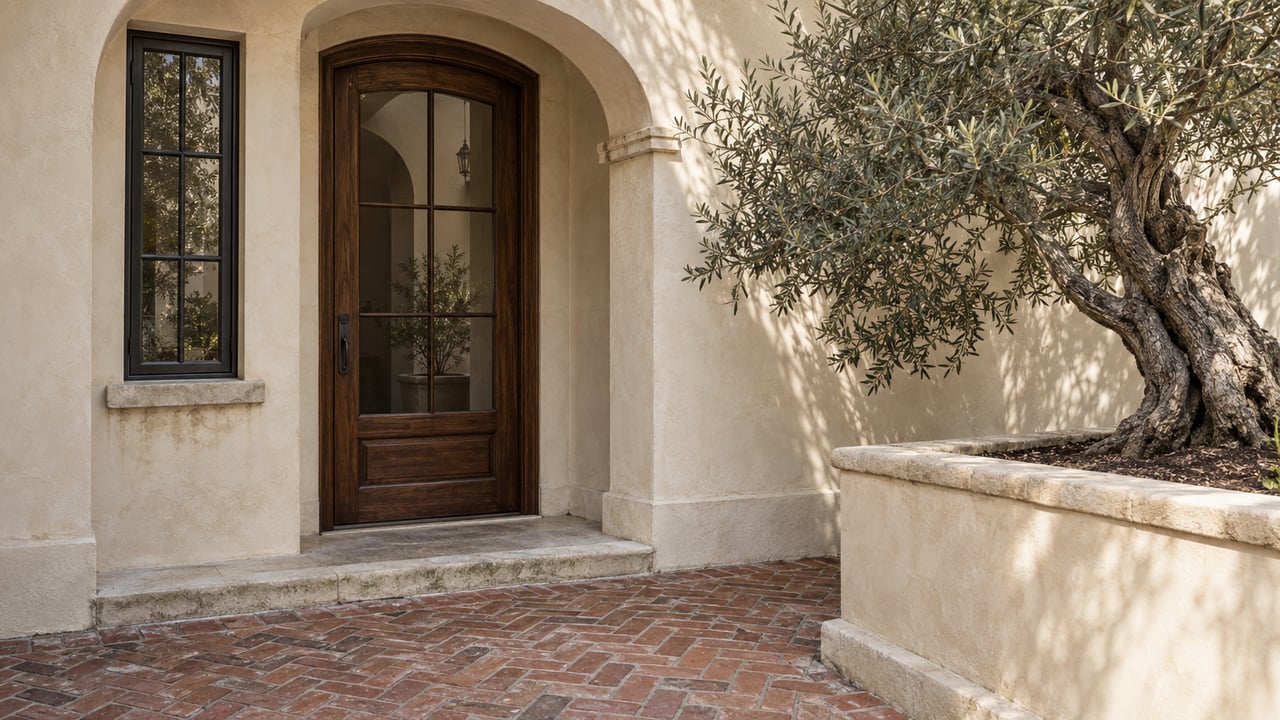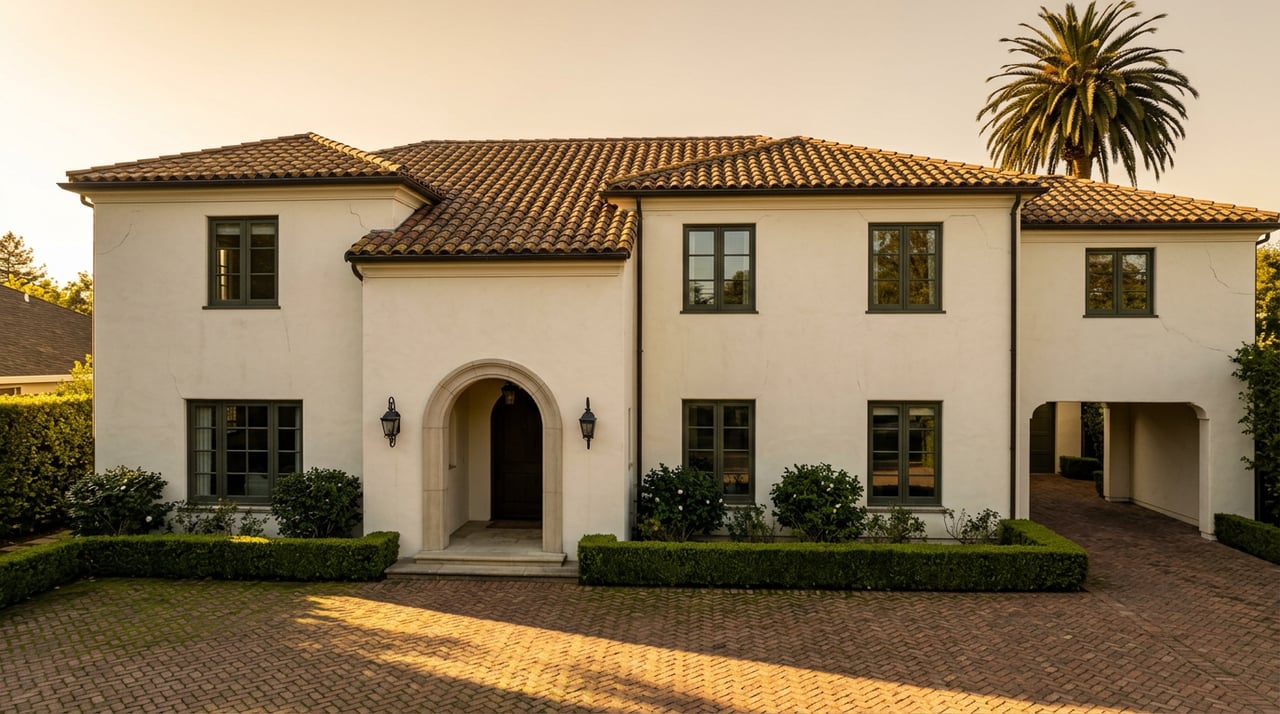
A 100-year-old English manor at 344 South Hudson Avenue went into contract in mid-July 2026 asking $16.5 million, after fewer than four weeks on the market. According to The Real Deal, it topped every other residential contract signed in Los Angeles County that week. For a house that old, in a neighborhood that protected, that kind of speed tells you the Historic Preservation Overlay Zone is doing exactly what buyers assume it does: keeping the streetscape intact enough that a $16.5 million commitment still feels safe.
What that sale doesn't show you is that the protection itself split in two this year. One half of it just got weaker. The other half just got reinforced by a City Council vote. If you own a Contributing Period Revival home here, or you're weighing whether to buy one, the difference between those two halves is the thing worth understanding before you sign anything.
Two Different Machines Wearing One Name
Since the City Council adopted the Hancock Park HPOZ in 2008, most owners have treated it as a single guarantee: nobody tears down a Tudor Revival next to you and puts up something out of scale, and nobody on your block replaces original windows with vinyl without a fight. That guarantee actually runs on two separate mechanisms. One is design review, the Certificate of Appropriateness process that decides what a renovation is allowed to look like. The other is density protection, whether state upzoning law can override local single-family zoning near your house at all.
For most of the HPOZ's history, both mechanisms moved together. In 2026, they don't. State housing law has started carving exceptions into the design-review half, while a separate state law fight just reinforced the density half. Anyone pricing a renovation, or pricing a sale, against "the HPOZ" as if it's one thing is working from an outdated map.
The Crack: State Law Doesn't Care About Contributing Status
The Starter Home Revitalization Act, known in planning circles as SB 1123, allows multiple new dwelling units to be added to single-family zoned parcels statewide, and it applies inside HPOZs regardless of whether the existing property is a Contributor or a Non-Contributor. That last part is the crack. The HPOZ's whole design vocabulary is built around that distinction, treating a Contributing Tudor differently from a Non-Contributing infill house. State law, for this specific category of project, doesn't recognize the distinction at all.
The mechanism behind that is a category of housing applications called "ministerial" permits, streamlined project types where state law now bars local jurisdictions from applying non-objective design guidelines. The problem for Hancock Park is that its Preservation Plan, like nearly every HPOZ Preservation Plan in the city, is written almost entirely in non-objective language: compatible massing, appropriate materials, consistent with the historic setting. For the specific project types SB 1123 and related state laws cover, the city currently can't hold those standards up.
Los Angeles City Planning's response arrived in November 2025, when the Office of Historic Resources contracted Architectural Resources Group to draft Objective Design Standards built specifically for HPOZs, covering new residential infill, mixed-use infill, and ADUs. The work is funded through a REAP 2.0 grant from the Southern California Association of Governments and sits inside the city's broader Missing Middle LA program. The public comment period on the draft standards closed July 28, 2026, and the standards still have to clear a City Planning Commission hearing before they carry any weight. Until they do, the city is trying to write a rulebook for a category of projects it currently has limited authority to shape.
The practical version of this for a Hancock Park owner: a homeowner repainting a porch or replacing a window on a Contributing house can still expect the full weight of subjective HPOZ review, staff level for routine work, a Board hearing for anything ambiguous. A project structured under the new state unit-adding pathways may not face that same design scrutiny at all, on a Contributing lot or a Non-Contributing one. The rulebook that's supposed to close that gap is still in draft.
Where the Boundary Held
The other half of the story ran the opposite direction. Senate Bill 79 pushes cities to allow greater density near transit, and Los Angeles has been working through how far to take that locally. On March 24, 2026, the City Council directed City Planning to pursue a phased approach that expands Corridor Transition incentives, extending them to single-family and lower-density parcels within half-mile buffers around eligible transit stations, while explicitly excluding HPOZs from that expansion.
That exclusion means Hancock Park's HPOZ boundary still functions as a real line against one major category of upzoning, even in the same year that a different category of state law is eroding its design authority. The two currents are running in opposite directions inside the same designation. Anyone telling you the HPOZ is simply "getting weaker" or simply "holding strong" is only describing one half of what's actually happening.
The Two-Track Approval Sequence, In Practice
None of the state-law complexity changes what a straightforward renovation looks like today. The sequence still runs like this:
- Start with the HPOZ Initial Screening Checklist through the Office of Historic Resources, which confirms whether your property is Contributing or Non-Contributing and whether the proposed work is visible from a public sidewalk. Visibility is determined from the sidewalk by the city's planner, not from behind a hedge or a mature tree.
- Routine, in-kind work, matching replacement windows, a repair using the same materials, an addition proportional to the existing structure, generally qualifies for staff-level Conforming Work review and can clear in a few weeks.
- Anything that requires interpreting the Preservation Plan, a larger addition, a new structure, or demolition of a Contributing element, goes to a full Board hearing. The Hancock Park HPOZ Board meets the second and fourth Wednesday of each month, 5:00 to 7:00 p.m., at Marlborough School, 250 South Rossmore Avenue. Public notice requirements mean these hearings typically add several months to a project timeline.
- The Board or staff review ends with a Certificate of Appropriateness, sometimes carrying specific conditions on materials or trim profile. The Los Angeles Department of Building and Safety will not release a building permit for regulated exterior work without that Certificate in hand.
- Work that isn't visible from the street, a rear addition behind the main house, for instance, generally skips HPOZ review altogether, but it still needs a standard LADBS building permit.
That last point catches people more often than any other part of the process. Skipping HPOZ review doesn't mean skipping permitting. It means one fewer approval body to satisfy, not zero.
What This Means Between $5 Million and $9 Million
Layer the renovation timeline against Measure ULA's transfer tax and the decision changes shape depending on price. For transactions closing after June 30, 2026, city of Los Angeles sales priced above $5.4 million but below $10.9 million carry a 4 percent transfer tax. Sales at or above $10.9 million carry 5.5 percent, which is why that $16.5 million Hudson Avenue contract carries a tax bill north of $900,000 on its own.
A renovated Period Revival trading in the $2 million to $3 million range never touches either threshold, so the renovate-or-sell question there stays a design and lifestyle decision, nothing more. A landmark estate on Muirfield Road or Lucerne Boulevard priced well above $10.9 million is dealing with a tax bill large enough that a Board-level renovation timeline is unlikely to change the outcome either way.
The math gets genuinely close in the middle, roughly $5 million to $9 million, where the cost and delay of clearing a Board hearing and the size of the ULA tax bill start to look like comparable numbers on the same spreadsheet. This is also the price band where a meaningful share of Hancock Park's older, larger homes change hands through a trustee or an estate, given how long many properties here have stayed with the same family. For a trustee weighing whether to invest in a COA-cleared renovation before listing or sell the house as-is, that comparison is worth running with real numbers, not assumptions. And because the ULA cliff is literal, a dollar under $5.4 million owes nothing, a dollar over owes the full percentage on the entire price, pricing strategy near that line deserves a direct conversation with your agent and your escrow officer well before a listing goes live.
A Short FAQ
Does a rear addition invisible from the street still need HPOZ approval? Generally no, since visibility is determined from the public sidewalk rather than from behind landscaping. It still needs a standard LADBS building permit even when it skips HPOZ review entirely.
Does inheriting a Hancock Park home trigger Measure ULA? No. The tax applies to a sale or transfer for consideration, not to inheritance on its own. If the estate later sells the home, the tax applies at that point based on the sale price and whichever thresholds are in effect at closing.
Can I avoid the tax by pricing just under $5.4 million? The cliff works exactly as it sounds. A dollar under the threshold and none of the tax applies. A dollar over and the full percentage applies to the entire price, not just the amount above the line, which is why pricing near that number is a real conversation with your agent and escrow officer, not an afterthought.
Hancock Park's HPOZ is still one of the strongest reasons buyers choose this neighborhood over a comparable Period Revival block elsewhere in the city. It just isn't the single, unchanging shield it was five years ago, and the pieces that are shifting right now, state design-review overrides on one side, a firmer density carve-out on the other, are exactly the kind of detail that changes what a renovation costs, what a listing should say, and when a sale should close.
If you're weighing a renovation against a sale on a Contributing property, or you're a trustee trying to price an inherited estate against the ULA thresholds, Barry Gray & Associates works this exact designation and this exact price tier regularly. Schedule a Free Consultation before you commit to either path.