If you are shopping in Beverly Hills, architecture is not just about curb appeal. The style of a home can shape how it lives, how easy it is to update, and what kinds of exterior changes may be reviewed by the City. If you want to buy with confidence, it helps to know what you are really looking at before you fall in love with a façade. Let’s dive in.
Why architecture matters in Beverly Hills
Beverly Hills has a distinct architectural identity that grew out of its early garden-city planning and decades of residential development. The city includes a wide range of historic and design-led homes, and that variety is part of what makes the market so appealing to buyers who care about character.
In Beverly Hills, style matters for more than aesthetics. The City’s design and preservation framework can affect what you can change, how a remodel is evaluated, and how well a home holds its architectural credibility over time. That makes architecture part of the buying decision, not just a personal preference.
Know the local review framework
Before you focus on finishes or floor plans, it helps to understand that Beverly Hills does not treat every property the same. Rules can vary by area and by whether a home is historic.
In the Central Area, visible exterior changes to single-family homes are subject to design review. In the Hillside Area, there is no design-review process, but there are separate standards related to floor area, setbacks, landform alteration, and view preservation. Trousdale Estates has its own rules as well.
If a property is historic, the City may require a Certificate of Appropriateness for alterations, reconstruction, relocation, stabilization, demolition, or exterior changes. The City also uses the Secretary of the Interior’s Standards for historic properties, so preservation issues can play a major role in what is feasible after closing.
Spanish Colonial homes
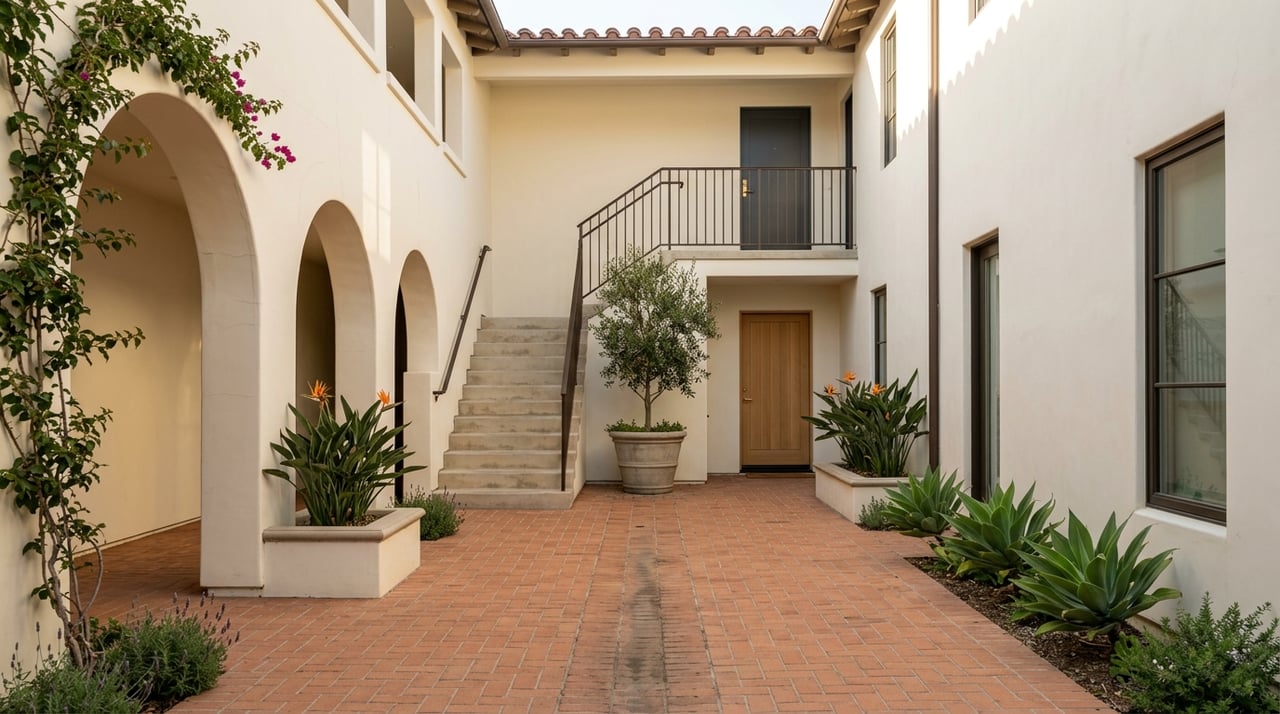
Spanish Colonial remains one of the defining looks in Beverly Hills. The City’s design catalog groups Spanish Colonial with Spanish Mission Revival and Monterey Style, with common features that include low-pitched roofs, red terra-cotta barrel tile, stucco walls, arched openings, wrought iron details, and patios or courtyards.
As a buyer, you will often find that these homes feel warm, layered, and intimate rather than fully open. Light tends to come through courtyards, patios, and larger windows placed with intention, instead of long walls of glass. Floor plans can feel more segmented than in a modern home, which some buyers love and others want to rework.
Spanish homes can offer strong renovation potential, but the details matter. If changes ignore original rooflines, arches, tile, or ironwork, the home can quickly lose its identity. In Beverly Hills, where the City emphasizes pure styles and neighborhood character, that loss of coherence can matter more than many buyers expect.
What to look for in Spanish homes
- Original proportions that still feel balanced from the street
- Courtyard or patio spaces that bring in light and privacy
- Roof, stucco, arches, and ironwork that appear consistent with the home’s style
- Renovations that feel integrated rather than generic
Midcentury Modern homes
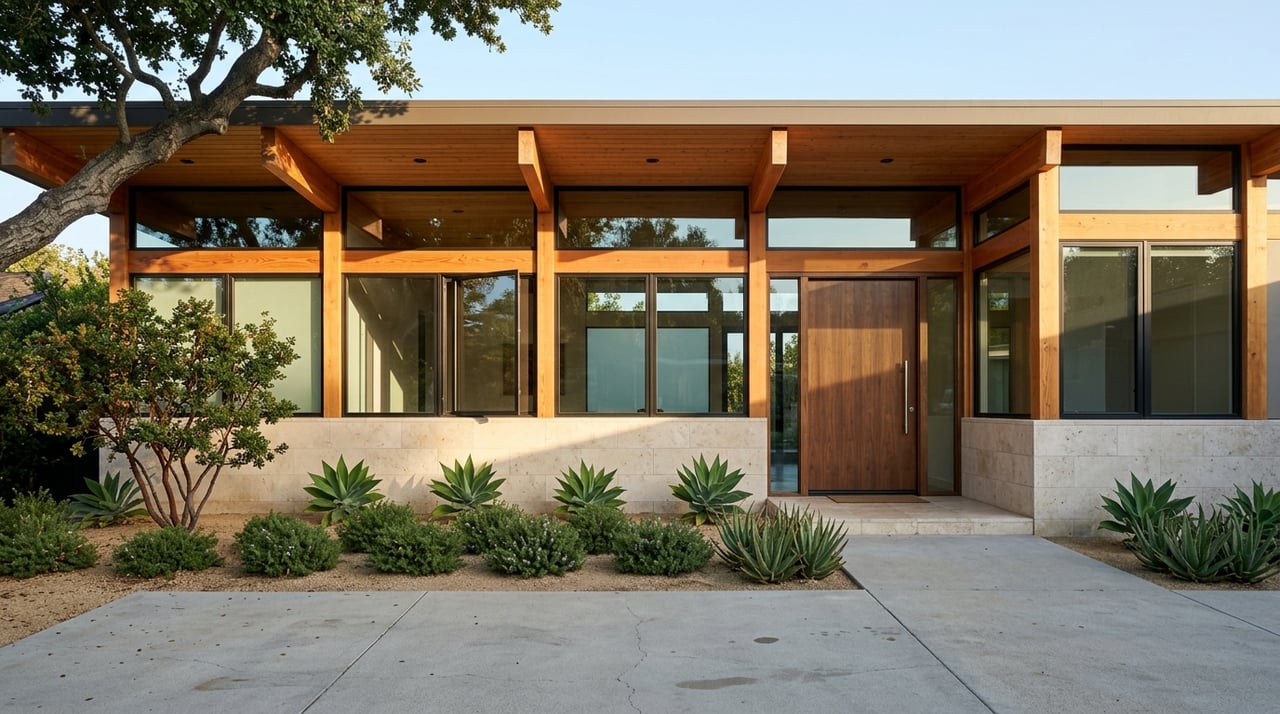
Midcentury Modern is especially important in Beverly Hills because of the city’s postwar development and the identity of areas like Trousdale Estates. The City’s Contemporary category includes Moderne and Modernism, described as flat-roofed, open-plan, horizontal, asymmetrical, and minimally ornamented.
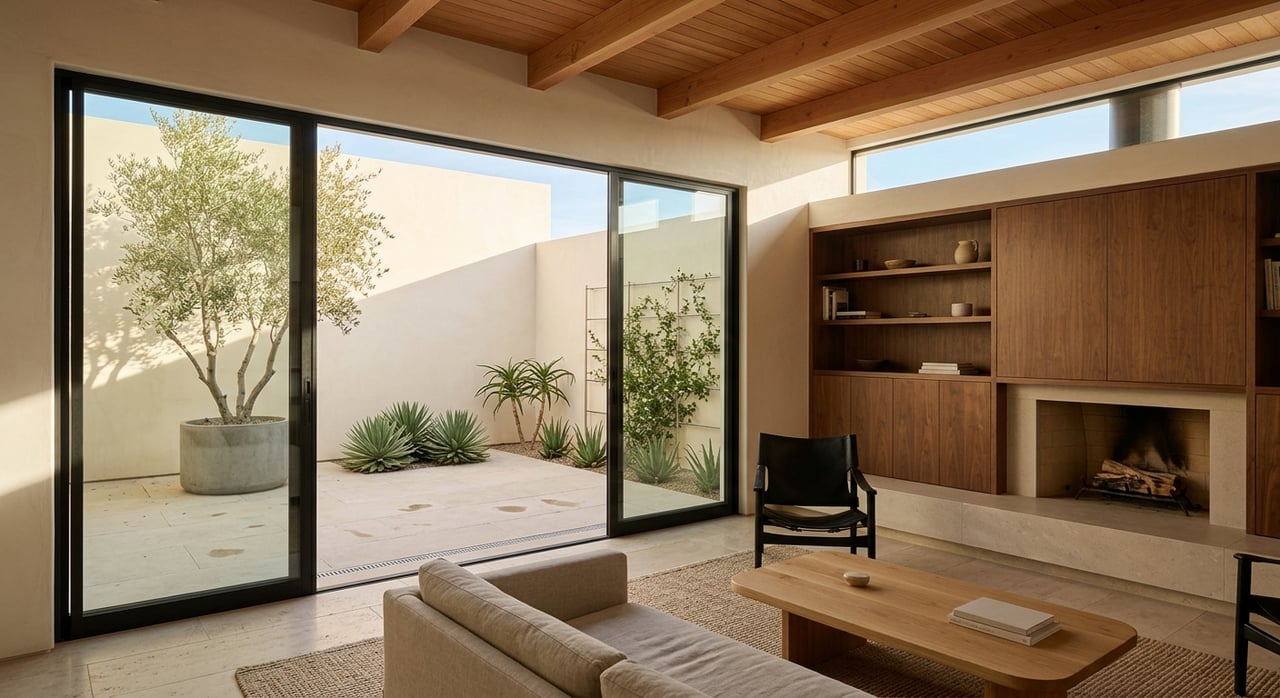
For everyday living, these homes are often among the easiest to enjoy if you want indoor-outdoor flow and connected gathering spaces. Large horizontal openings, open plans, and broad glazing can create bright interiors and a strong connection to the site.
The tradeoff is sensitivity. Midcentury homes can lose authenticity fast if you change the roof profile, swap out original-style window systems without care, or add decorative features that fight the architecture. Buyers who value design integrity should pay close attention to whether updates feel thoughtful or simply convenient.
Why buyers are drawn to Midcentury Modern
- Open layouts that fit a modern lifestyle
- Strong daylight and indoor-outdoor connection
- Clean lines and minimal ornament
- A design language that rewards careful, respectful updating
Contemporary homes
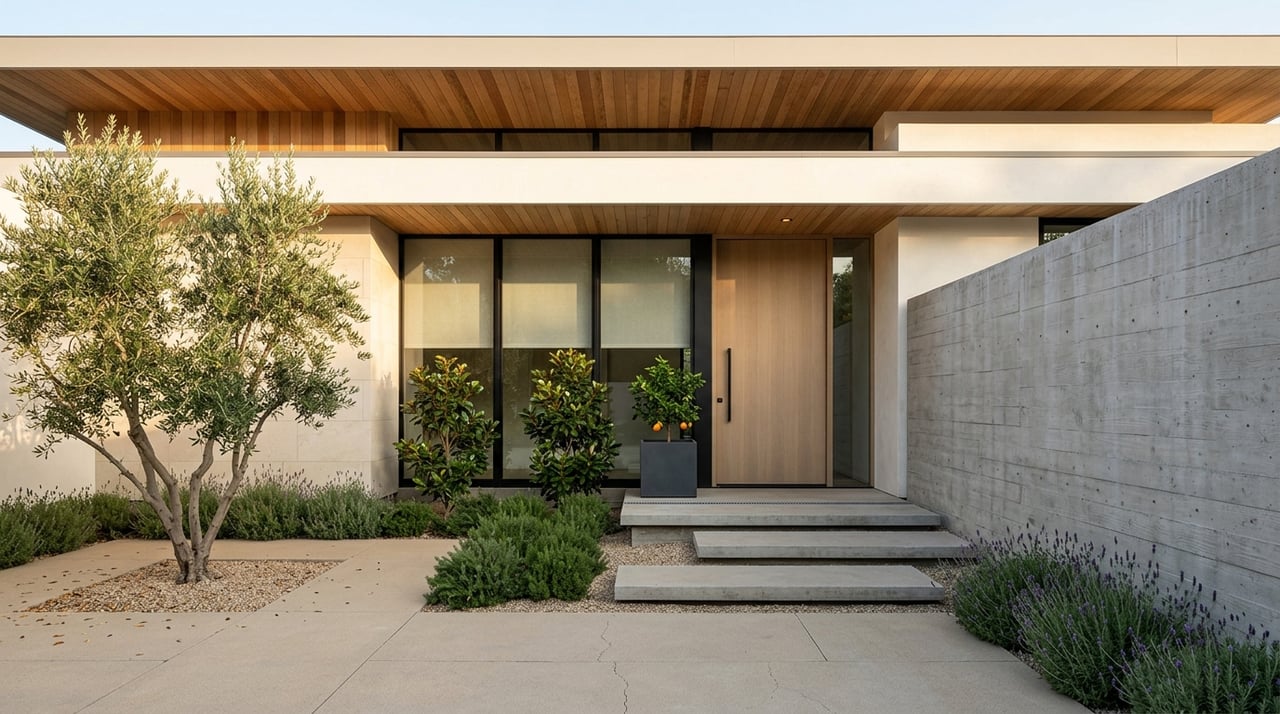
Contemporary architecture in Beverly Hills is broader than many buyers think. The City’s catalog places Moderne, International Style, and Post Modern under this umbrella, with shared qualities such as strong geometry, minimal ornament, large openings, and clarity of materials.
These homes are often the most view-focused and lifestyle-flexible. If you want open circulation, seamless outdoor spaces, and a home that already speaks a modern design language, Contemporary properties often deliver that more naturally than period homes.
That said, execution matters. Contemporary architecture can feel timeless when proportions, glazing, and materials are disciplined, but it can also feel dated if the design is overdone. In Beverly Hills, the strongest examples tend to look intentional from the street and sit comfortably within the city’s neighborhood-character framework.
Traditional homes
In Beverly Hills, “Traditional” usually refers to a broad group of revival styles rather than one exact look. The City’s materials include American Colonial, Georgian and Federal Revivals, Cape Cod, Neo-Colonial Revival, English Cottage, Tudor, French Normandy, Classical Revival, and related forms.
These homes often appeal to buyers who want a familiar exterior and more separation between rooms. Compared with Midcentury or Contemporary homes, they tend to have more formal entries, more defined public and private spaces, and windows placed in a more rhythmic pattern.
That can mean more privacy and a timeless street presence, but it can also mean less natural light and a floor plan that feels more compartmentalized. If you are considering updates, pay attention to whether the home’s massing and details remain intact. A Traditional house usually benefits from renovation, but only when the work respects the original composition.
Common strengths of Traditional homes
- Timeless curb appeal
- Defined room layout and privacy
- Broad buyer familiarity at resale
- Strong compatibility with the city’s emphasis on recognizable architectural character
How to think about historic status
Older does not automatically mean historic, and survey inclusion is not the same as formal designation. According to the City, landmark criteria generally require a property to be at least 45 years old, retain substantial integrity, and embody the distinctive characteristics of an architectural style, type, or period.
That distinction matters when you are evaluating flexibility. A home may be architecturally significant without being formally designated, but a designated historic property can face a different approval path for changes. If preservation or remodeling is part of your plan, this is worth clarifying early.
Match the style to your lifestyle
A smart purchase in Beverly Hills is not only about buying the prettiest house. It is about buying the right fit between architecture, daily living, and future plans.
If you want warmth, texture, and private courtyard living, Spanish Colonial may be a strong fit. If you want light, openness, and clean lines, Midcentury Modern or Contemporary may make more sense. If you want a classic exterior and a more formal layout, Traditional homes often offer that in a way many buyers find comfortable over time.
One useful question to ask is not just “Do I love this style?” but “Do I want to live with the rules and renovation logic that come with this style?” In Beverly Hills, that second question can save you from expensive surprises later.
Think about resale through the lens of integrity
Beverly Hills sits at the top end of the local market, with a March 2026 median sale price of $9.0 million in the research snapshot. In a market like that, buyers are often paying for more than size alone. Architectural pedigree, lot setting, and design coherence can carry real weight.
The City explicitly ties design guidance to neighborhood character and property values. That helps explain why homes that are stylistically coherent, well maintained, and historically intact often have lasting appeal. A remodel that fights the original architecture may still function well, but it can weaken the home’s architectural credibility.
A buyer checklist before you write an offer
Before you move forward on a Beverly Hills home, it helps to review a few architecture-specific questions:
- What style is the home, and does the current condition support that style clearly?
- Is the property in the Central Area, Hillside Area, or Trousdale Estates?
- Are there visible exterior changes you would want to make after closing?
- Is the home formally designated historic, or only identified in a survey?
- Do past renovations feel consistent with the original design language?
- Does the layout match how you actually want to live?
The better you understand these points before you buy, the easier it is to make a decision that feels right both emotionally and financially.
If you are considering a Beverly Hills home, working with a team that understands architecture, preservation issues, and local review context can make the process much clearer. To talk through style, fit, and strategy, connect with Barry Gray & Associates.
FAQs
What architectural styles are most common in Beverly Hills homes?
- Beverly Hills includes Spanish Colonial, Midcentury Modern, Contemporary, and a wide range of Traditional revival styles such as Tudor, Cape Cod, Colonial Revival, and French Normandy.
What should Beverly Hills buyers know about design review?
- In the Central Area, visible exterior changes to single-family homes are subject to design review, while the Hillside Area follows separate standards for issues like floor area, setbacks, landform alteration, and view preservation.
What should buyers know about historic homes in Beverly Hills?
- A historic property may require a Certificate of Appropriateness for certain changes, and formal landmark status is separate from inclusion in a historic resource survey.
Which Beverly Hills home styles usually have the most natural light?
- Midcentury Modern and Contemporary homes usually offer the most light because the City associates them with open plans, horizontal openings, and expansive glazing.
Which Beverly Hills home styles are easiest to update for resale?
- Traditional homes and well-kept Spanish homes are often seen as broadly appealing, but in Beverly Hills, resale tends to benefit most when any remodel stays true to the home’s original architectural character.
Why does architectural integrity matter when buying in Beverly Hills?
- The City’s design guidance emphasizes neighborhood character and recognizable styles, so homes that remain coherent and well maintained often have stronger long-term appeal than homes with mismatched remodels.